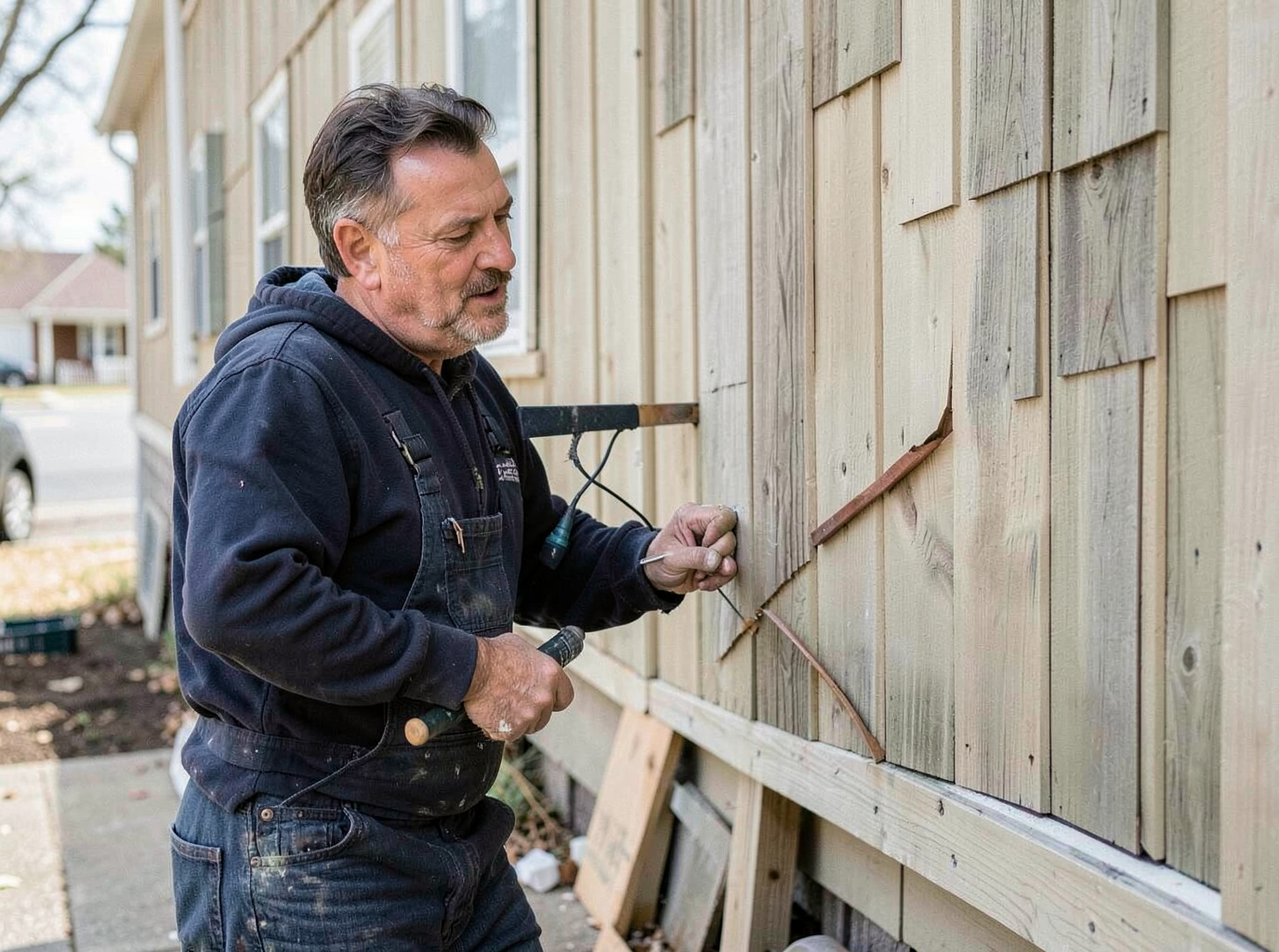
Creative Effects Contracting handles siding replacement in Holly Springs, NC, where many homes sit on larger lots with clay-heavy soil that holds moisture after summer rains. Crews work around established trees and driveways common in neighborhoods off Main Street, protecting existing landscaping while removing old vinyl or fiber cement boards. Hot humid summers speed up expansion and contraction cycles, so crews install proper ventilation gaps and flashing at windows to limit future buckling.
Access from Raleigh via NC-55 or I-540 makes it straightforward to schedule Holly Springs inspections after winter wind events. Homes built in the 1990s through early 2000s often show sun fade on south-facing walls near Bass Lake and Ting Park, requiring color-matched replacement panels that hold up to the area's mild winters without cracking. Crews measure twice on site to match existing trim profiles found on streets around Holly Springs High School.
Work in Holly Springs focuses on drainage details at the base of siding because Wake County red clay can push water toward foundations during heavy downpours. Replacement jobs include checking weep holes and installing new starter strips so water moves away from the house instead of pooling against the wall.
Around Holly Springs, NC
We regularly work near:
- 📍Ting Park
- 📍Holly Springs High School
- 📍Holly Springs Cultural Center
- 📍Holly Springs Town Hall
- 📍Bass Lake Park
Siding Contractor in Holly Springs, NC — Local Notes
- •Clay soils around Holly Springs hold water longer after storms, so crews add extra flashing at the bottom course of new siding to direct runoff away from foundations.
- •Many homes near Ting Park and Holly Springs High School have south- and west-facing walls that receive direct summer sun, leading to faster fading of original vinyl and earlier replacement needs.
- •Larger lots with mature trees require careful scaffolding placement and debris containment so crews avoid damaging driveways and landscaping common in the area.
- •Mild winters still bring occasional freeze-thaw cycles that can loosen older siding fasteners, prompting checks for loose boards before full replacement projects begin.