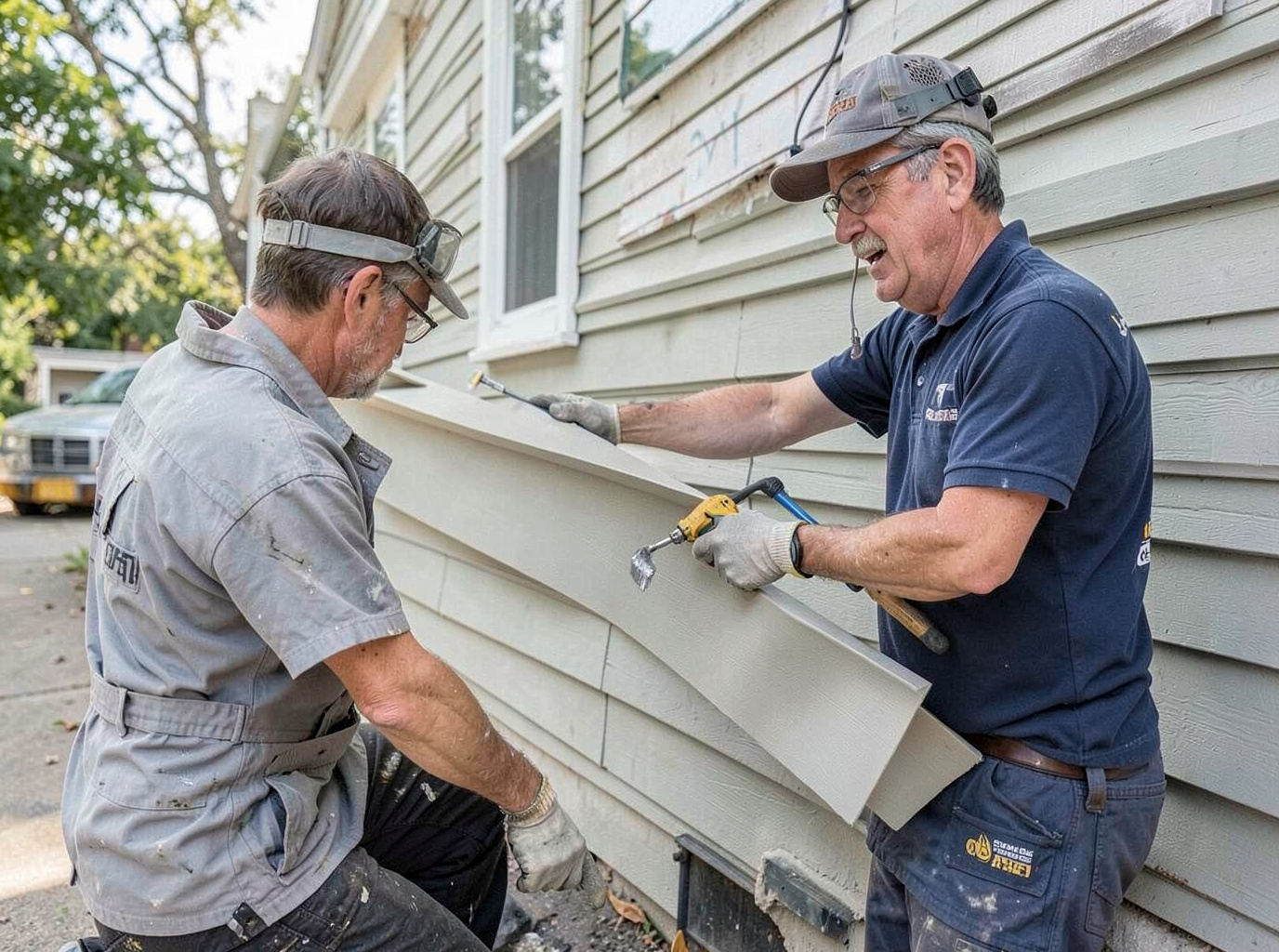
Fiber cement siding in Raleigh holds up well through hot humid summers and occasional winter freezes because it resists moisture absorption when installed with proper ventilation and flashing. Homes in historic districts such as Oakwood and Boylan Heights often have irregular surfaces and older sheathing that require extra time to align new panels without telegraphing waves. Installers must account for the high water table and frequent afternoon thunderstorms that can drive rain behind poorly sealed joints.
In newer subdivisions near Falls of Neuse or North Hills, fiber cement works cleanly over OSB sheathing but needs a minimum 3/8-inch rainscreen gap to prevent condensation during long stretches of high humidity. Matching the existing 5/16-inch or 7/16-inch thickness on 1980s and 1990s Cary and Wake Forest homes avoids trim transitions that collect water. Always check local Wake County wind-load requirements for corner and eave detailing.
Edge cases include staining from red clay soil splash-back near Dorothea Dix Park and Pullen Park properties and UV fading on south-facing walls along Glenwood South. Proper caulking at window and door openings with high-quality polyurethane prevents the most common callbacks after summer storms.
When replacing wood siding on Cameron Village or Five Points homes, crews remove all old felt or paper before applying new housewrap. This step is critical because many 1940s-1960s structures have single-layer walls that trap moisture once covered with fiber cement.
Technician insight
In Raleigh the thing that catches most people out with fiber cement siding is skipping the rainscreen gap on 1950s and 1960s homes in Boylan Heights and Oakwood. Those single-layer walls hold moisture against the back of the new panels during our long humid summers and you end up with paint blistering within two seasons.
North Hills two-story replacement
Original cedar siding on a 1978 North Hills home had cupped and allowed water behind the sheathing near the chimney. We removed the cedar, replaced two sheets of OSB, added a rainscreen mat, and installed 7/16-inch primed fiber cement with matching trim. The owner reported no further staining after the next summer's heavy rains.
Fiber Cement Siding Services We Offer
✓Fiber Cement Siding Installation
Full installation of primed or prefinished fiber cement panels on new or existing Raleigh homes with proper rainscreen and flashing details suited to Wake County humidity.
✓Fiber Cement Siding Replacement
Complete removal of failing wood or vinyl and replacement with fiber cement panels that match the scale and reveal of homes in Oakwood, Mordecai, and Hayes Barton.
✓Fiber Cement Siding Repair
Targeted replacement of cracked, chipped, or water-damaged panels plus resealing of joints to stop moisture intrusion common after summer thunderstorms.
✓Fiber Cement Trim and Soffit Work
Installation of matching fiber cement trim, fascia, and soffits around windows, doors, and eaves to maintain clean lines on North Hills and Five Points homes.
✓Moisture Barrier Integration
Addition of rainscreen drainage mats and upgraded housewrap behind fiber cement to protect older Wake County homes from humidity-driven condensation.
Fiber Cement Siding Cost in Raleigh, NC
| Service | Typical Range | What Affects It |
|---|---|---|
| Full fiber cement siding replacement | $8–$14 per sq ft | Includes removal, new weather barrier, and trim; higher on two-story homes with difficult access in Oakwood or Glenwood South. |
| Panel replacement repair | $35–$75 per panel | Varies with size, finish match, and whether substrate repair is needed after storm damage. |
| Rainscreen upgrade during install | $1.50–$3 per sq ft | Added cost for furring strips and drainage mat on older single-wall homes. |
Ranges are typical for Raleigh, NC and confirmed with an exact written quote before any work starts.
How it works
- 1
Site Assessment
Measure walls, note existing sheathing condition, and check for rot around windows in neighborhoods like Boylan Heights or Downtown Raleigh.
- 2
Material Selection And Prep
Choose panel thickness and finish that match the home's age, then stage materials with proper acclimation for local humidity levels.
- 3
Removal And Substrate Repair
Strip old siding, repair or replace damaged sheathing, and install new weather barrier rated for Wake County wind and rain exposure.
- 4
Panel Installation
Hang fiber cement with required gaps, rainscreen furring, and corrosion-resistant fasteners, paying special attention to eave and corner details.
- 5
Finishing And Cleanup
Caulk all joints, install trim, and clean the site while inspecting for proper drainage away from the foundation.
Pricing
Most Raleigh fiber cement projects fall between several thousand and low five figures depending on square footage and access.