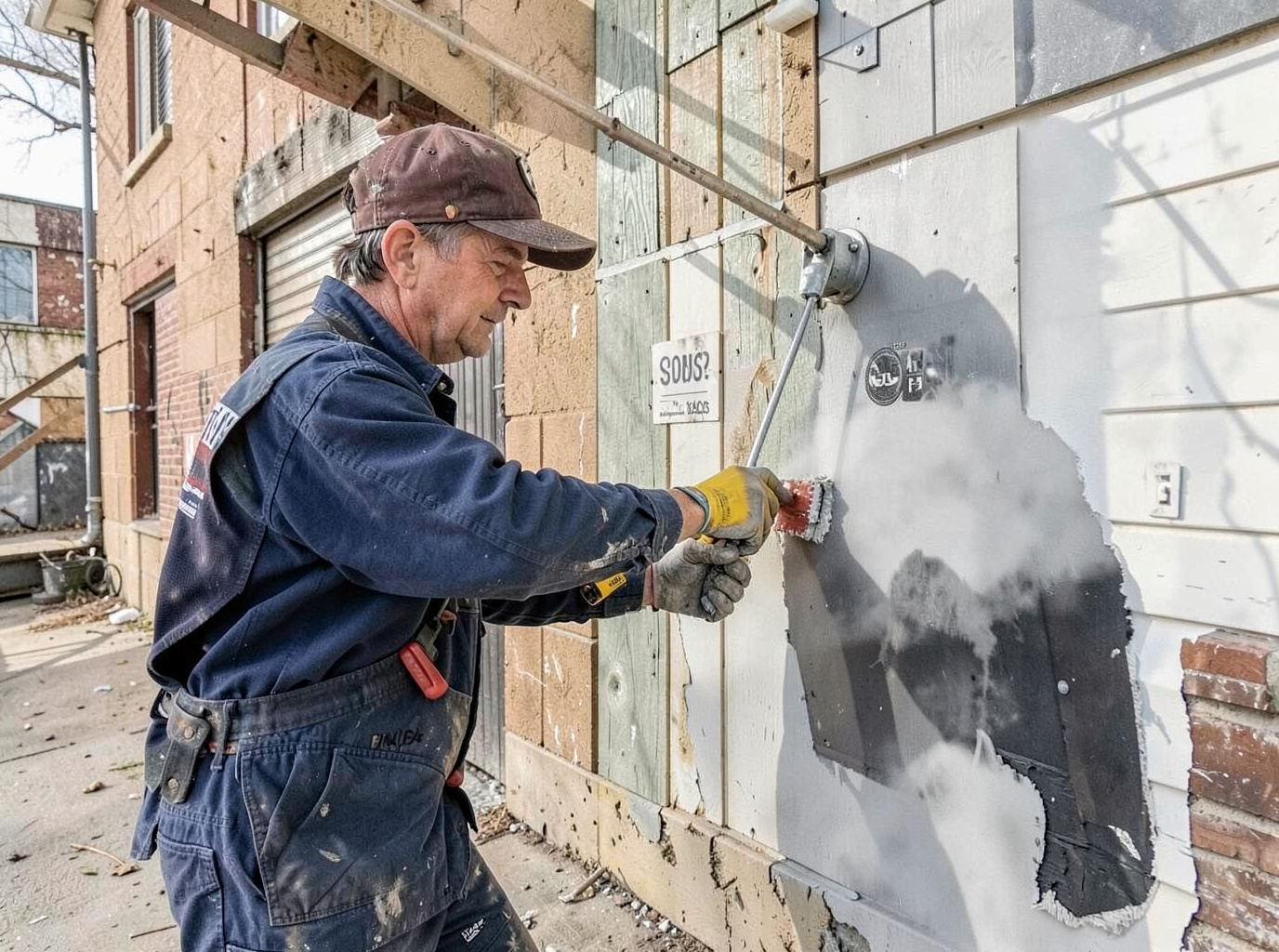
Most siding repair in Raleigh, NC traces back to the weather: the humid subtropical climate drives repeated expansion and contraction cycles that crack vinyl and pull wood siding apart, especially on 1920s-1950s homes in Oakwood and Boylan Heights. Moisture trapped behind layers often leads to hidden rot along bottom courses where soil splash from Wake County clay meets the foundation. Repairs here require matching existing profiles exactly so new sections do not telegraph under the sun angles common in summer.
In neighborhoods like Hayes Barton and Five Points, fiber cement and cedar shake combinations appear on mid-century stock. These materials fail differently: cement cracks at nail lines while cedar cups and holds water. A proper repair isolates the affected board or panel, treats the sheathing, and installs new pieces with stainless fasteners rated for coastal humidity even though Raleigh sits inland. Skipping the sheathing step lets the same moisture problem return within two seasons.
Downtown Raleigh and Cameron Village renovations often involve historic district guidelines that limit visible changes. Matching paint colors and reveal lines matters as much as structural integrity. Technicians carry multiple profiles of aluminum coil and vinyl in the truck because local suppliers do not stock every 1960s pattern anymore, and ordering delays push jobs into the next humidity spike.
Mild winters still produce freeze-thaw cycles that open seams around windows in North Hills and Falls of Neuse. These small gaps allow wind-driven rain to reach the house wrap. Repair crews routinely pull trim to inspect the wrap rather than simply caulking the exterior, because surface fixes fail within one heavy summer thunderstorm season.
Technician insight
In Raleigh the thing that catches most people out with siding repair is hidden rot behind the bottom two courses on 1940s-1960s homes in Oakwood and Boylan Heights. The clay soil and summer humidity keep the back side wet long after the exterior looks dry, so a small exterior patch often turns into a full wall opening once the sheathing is exposed.
Oakwood Home Bottom-Course Repair
Homeowner noticed soft spots near the foundation on a 1948 house in Oakwood. Inspection showed water had wicked up from splash-back and rotted three cedar boards plus the sheathing behind them. Crew removed the damaged boards, treated the framing, replaced the house wrap section, and installed new cedar to match the original reveal. The repair blended with the rest of the elevation and stopped further moisture entry before the next summer humidity cycle.
Siding Repair Services We Offer
✓Vinyl Siding Panel Replacement
Replace cracked or dented vinyl panels on North Hills and Cameron Village homes while matching existing color and texture to avoid visible patchwork.
✓Wood Siding Rot Repair
Cut out rotted sections in Oakwood and Boylan Heights cedar or pine siding, treat framing, and install new boards that blend with original grain and paint lines.
✓Fiber Cement Crack Patching
Fill and reinforce cracked fiber cement boards common on 1970s-1990s Wake County homes without removing entire walls.
✓Storm Damage Siding Repair
Address hail and wind dents on siding around Raleigh Convention Center and Glenwood South properties after summer storms.
✓Moisture Intrusion Siding Repair
Locate and correct water entry points behind siding in humid conditions typical of Mordecai and Five Points neighborhoods.
Siding Repair Cost in Raleigh, NC
| Service | Typical Range | What Affects It |
|---|---|---|
| Single vinyl panel replacement | $250–$450 | Price rises with height above one story and color matching difficulty on older stock. |
| Wood rot repair per board | $300–$600 | Depends on board length and whether sheathing replacement is needed. |
| Fiber cement crack repair | $200–$500 | Varies by number of cracks and access around windows or corners. |
| Storm damage assessment and repair | $150–$350 | Initial visit; repair cost added after full inspection of affected elevations. |
Ranges are typical for Raleigh, NC and confirmed with an exact written quote before any work starts.
How it works
- 1
On-Site Assessment
Examine the full elevation and adjacent walls to find the extent of hidden damage behind the visible repair area.
- 2
Material Matching
Pull samples and match profile, thickness, and finish against stock carried for older Raleigh housing stock.
- 3
Selective Removal
Remove only the damaged sections while protecting surrounding material and weather barrier.
- 4
Repair And Finish
Install new pieces, seal transitions, and blend paint or texture so the repair disappears under normal viewing angles.
Pricing
Most siding repairs in Raleigh fall between a few hundred dollars for small patches and several thousand when multiple elevations or hidden rot require opening walls.